Kato × 2026 × case study
From countless hours chasing invoices to 98% paid on time
Moving ~700 organisations from a manual, CS-led invoicing model to a fully self-serve billing experience.
Kato × 2026 × case study
Moving ~700 organisations from a manual, CS-led invoicing model to a fully self-serve billing experience.
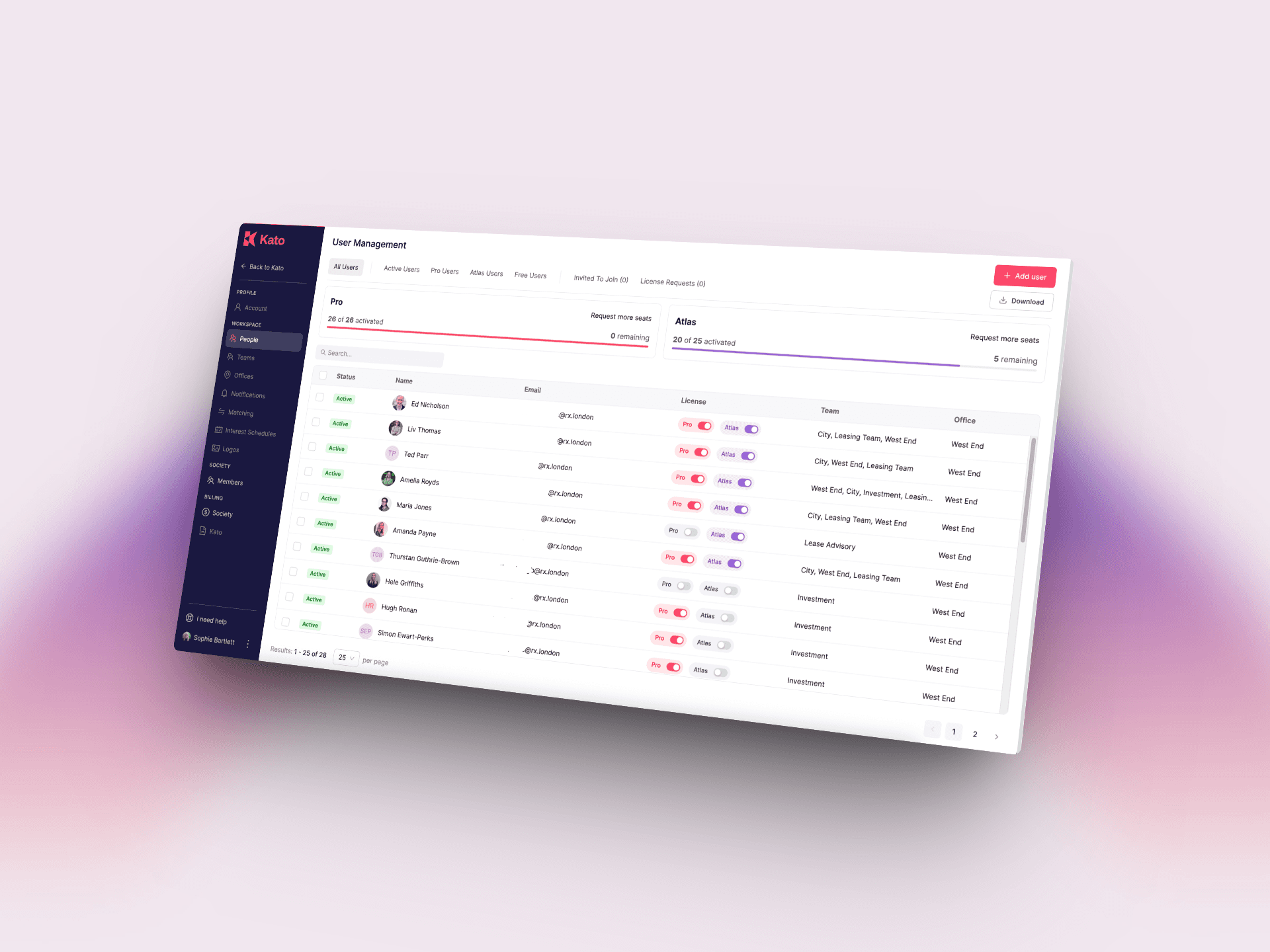
Kato's society billing process was heavily manual, placing significant operational load on the Customer Success team and creating friction for organisations managing their members.
The goal was to move from a CS-led invoicing model to a fully self-serve billing experience, enabling organisations to manage seats, payments, and renewals directly within the product.
Billing for societies was fragmented and manual:
The result: high internal overhead, slow turnaround for customers, and limited scalability of the model.
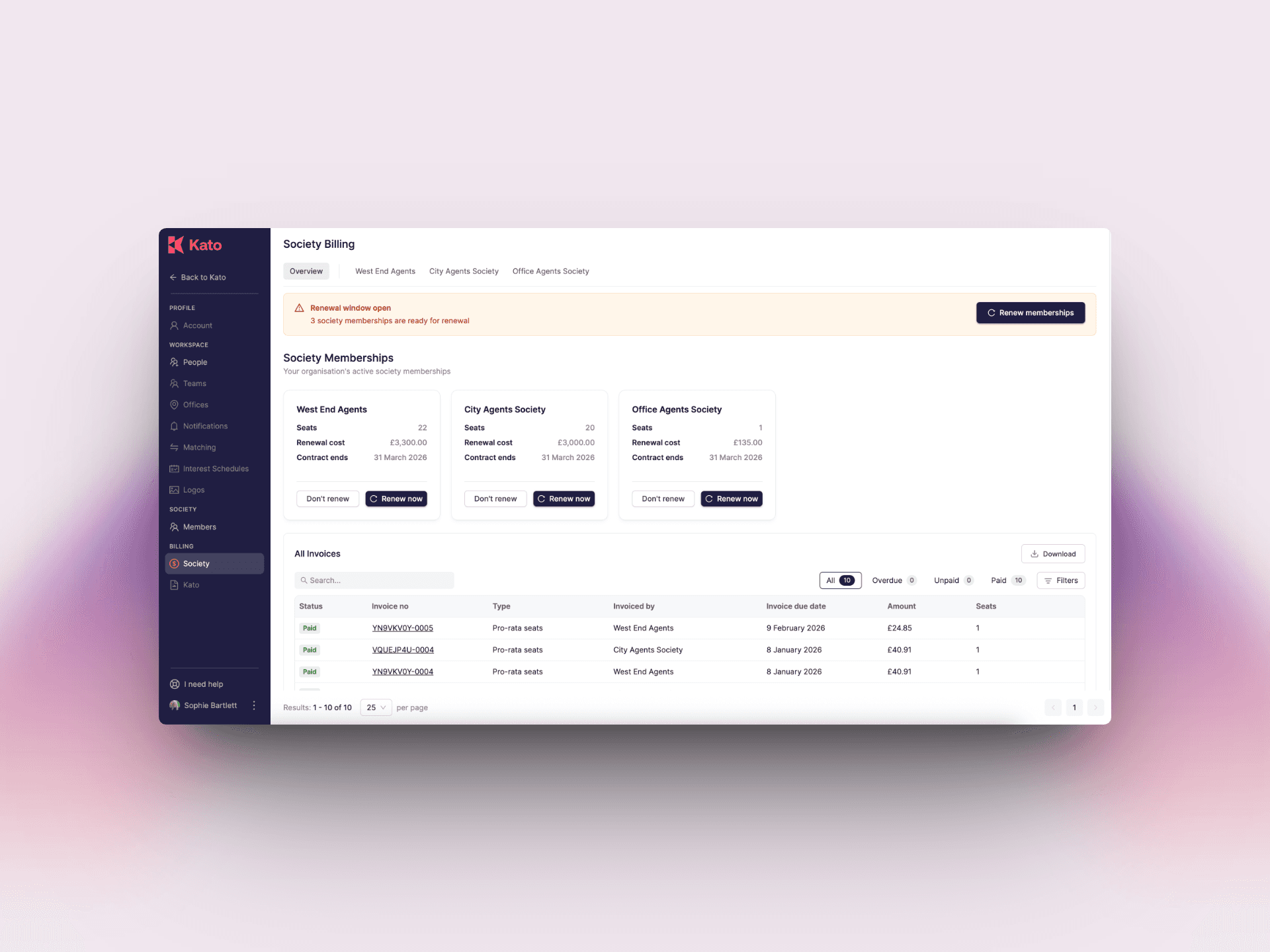
A billing experience that lets organisations pay for memberships directly by card, add and manage members within the product, purchase additional seats on demand, and handle renewals without CS involvement.
Making complex billing states feel simple. Keeping pricing and seat logic clear at every step. Reducing the risk of user error during payment and renewal flows.
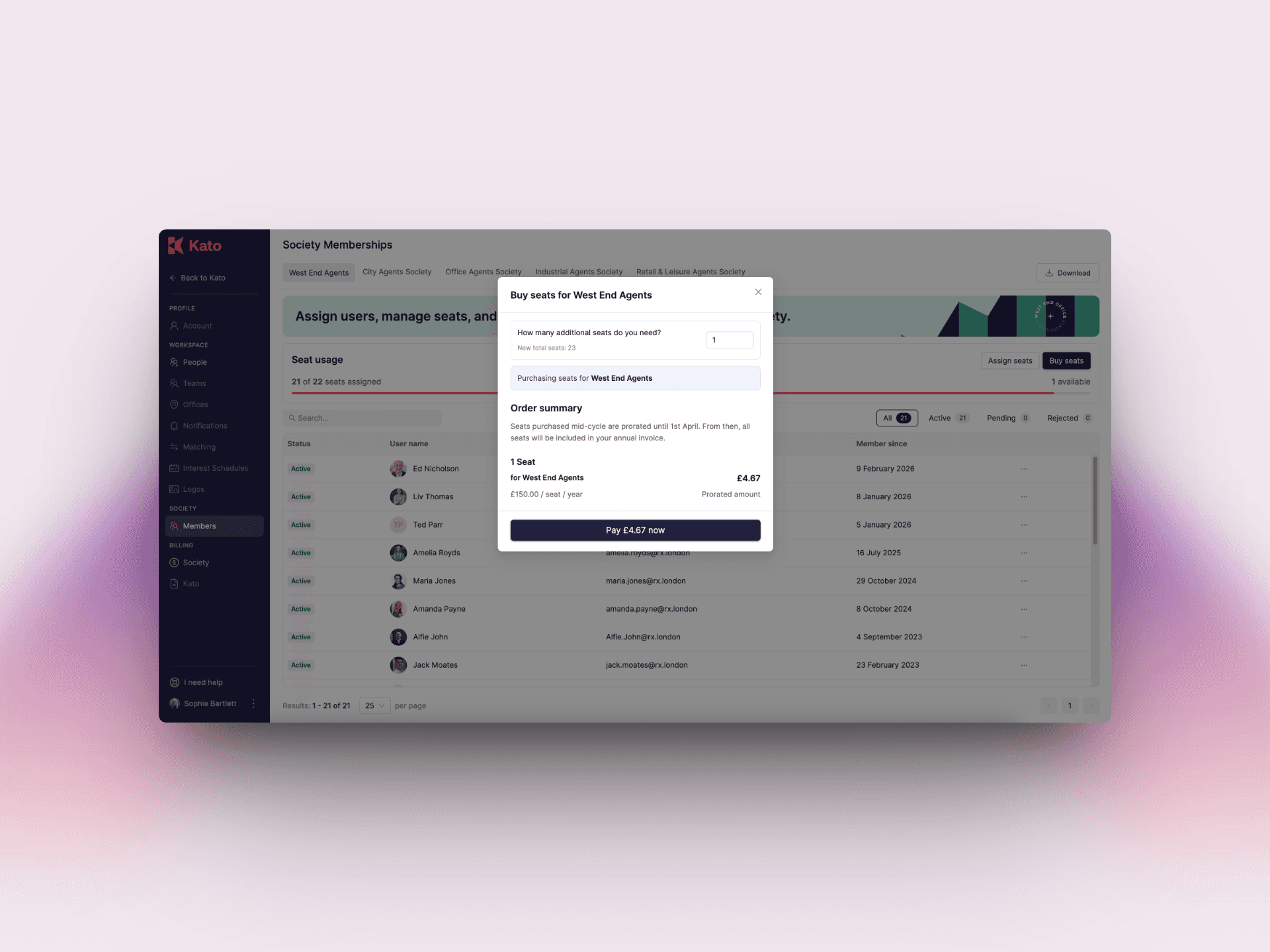
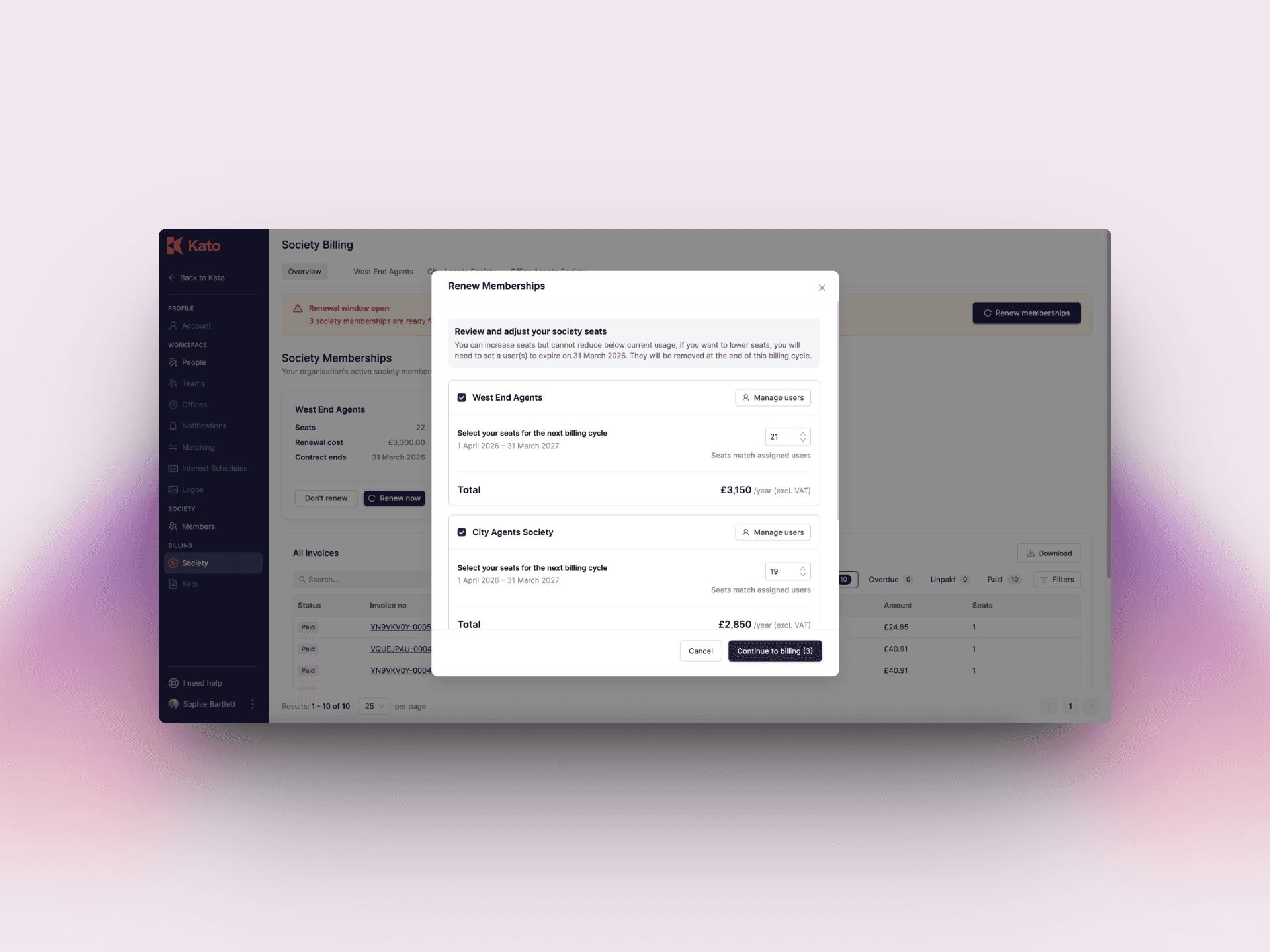
Previously, CS manually contacted organisations, seat counts were confirmed over email, and invoices were created and processed by hand. The new approach: a clear in-product renewal flow with visibility of current seat usage and the upcoming renewal, letting organisations adjust seats and confirm in a few steps.
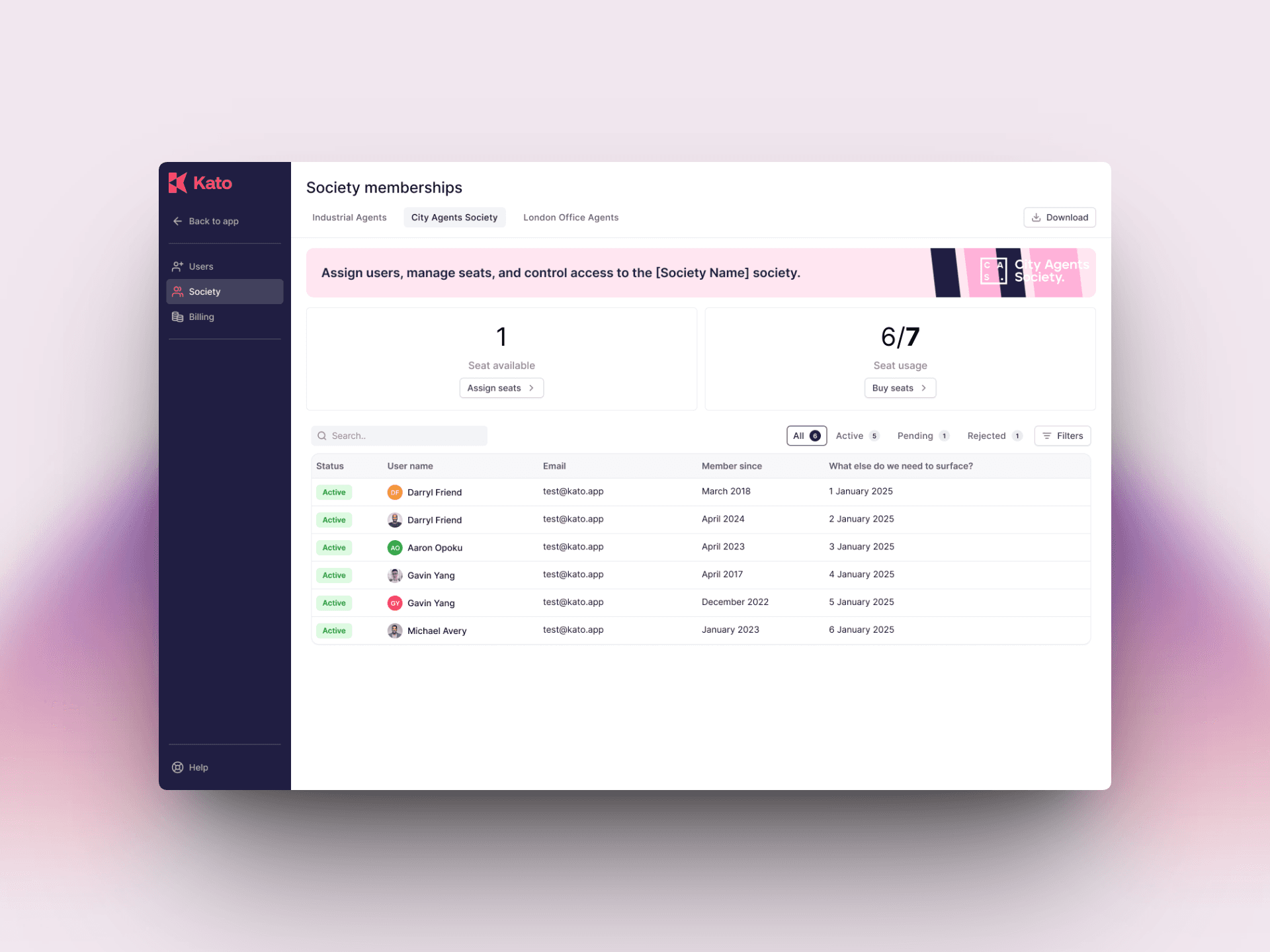
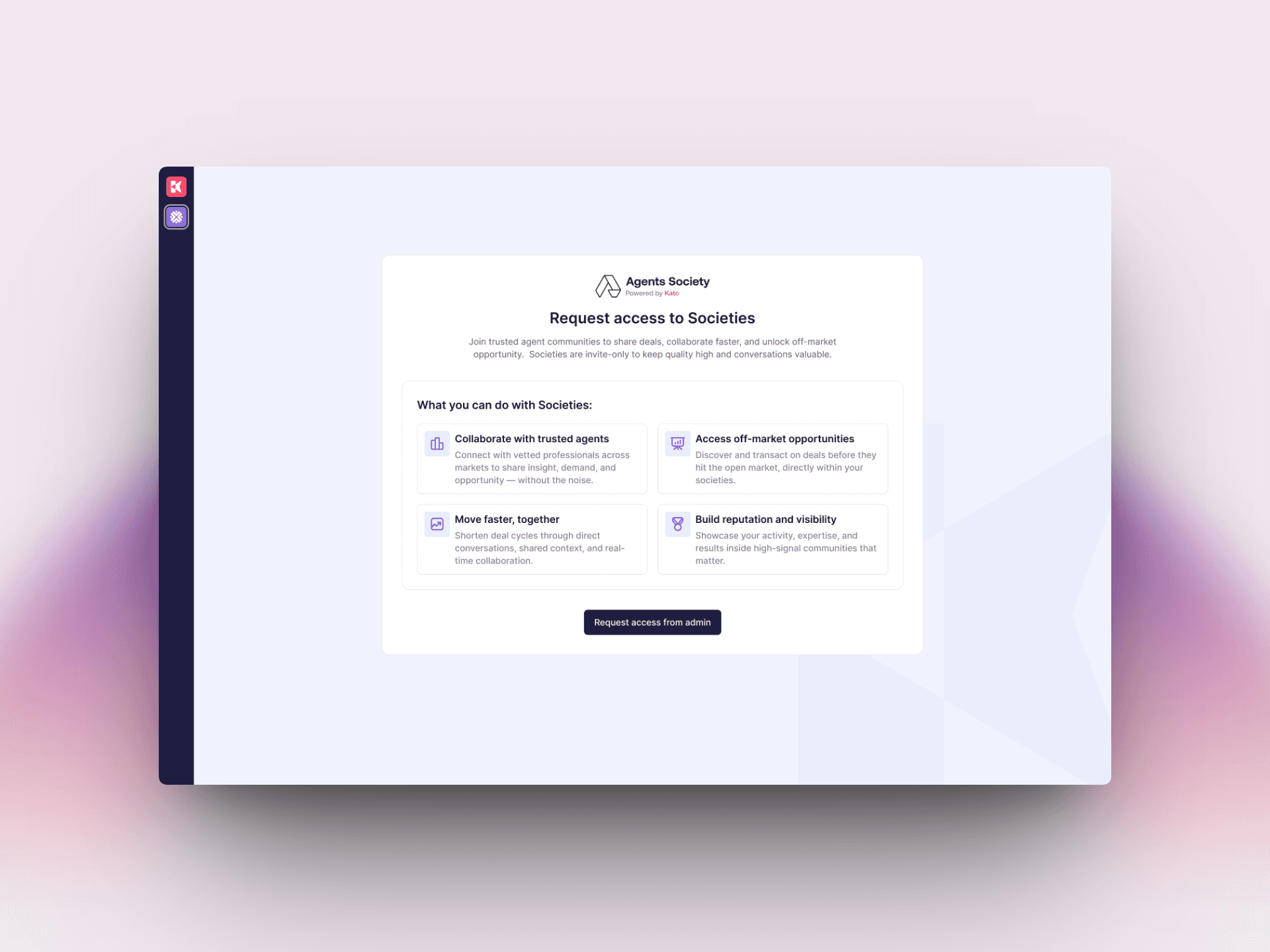
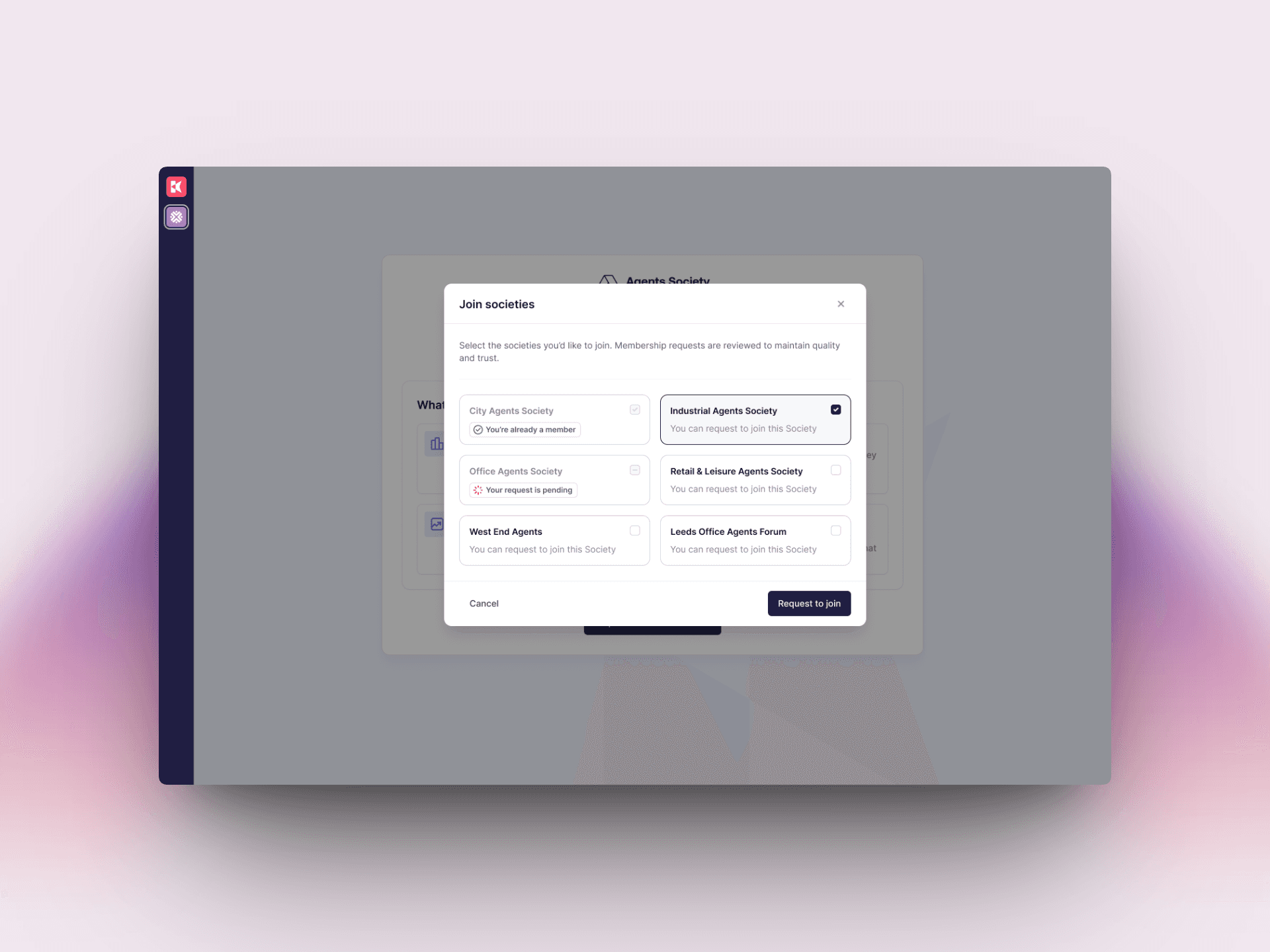
Users and organisations can now discover societies within the platform and request to join directly in-product, previously handled externally via society websites.
of organisations paid on time
paid by card on renewal date
requiring follow-up: just 7 of ~700
Shifted a manual, CS-led process to a scalable self-serve system.