Work About Contact open to new roles

Kato × case study

The UK's real-time commercial property data platform, zero to one

Building the workflows and dashboard that turn agent transactions into trusted, live market intelligence.
ROLEProduct Designer
SERVICEProduct design
User research
TRUSTED BY100+ companies incl. Savills,
Knight Frank, CBRE, JLL
TYPE0–1 product
Atlas dashboard
Overview

Atlas is Kato's real-time commercial property data platform: a trusted, collaborative source of transaction data contributed by agents, for agents. It was built from scratch as a 0–1 product.

I owned the design of the dashboard, the primary surface where agents discover, search, and act on market intelligence. Alongside this, we ran user testing across the full product and worked closely with the wider team on the transaction workflows, contributing through design critiques, usability testing, and iterative feedback.

The problem

The UK commercial real estate market had no single, trusted source of transaction data:

  • Comparable evidence was fragmented: agents relied on chasing peers via phone and email to gather transaction details
  • Significant data lag: information from traditional channels was often weeks or months out of date
  • No real-time visibility into market activity, agency performance, or emerging opportunities
  • Double-keying and manual processes: the same transaction data entered into multiple systems
  • No standardised way to verify or validate deal data across firms

The result: slow, unreliable comparable evidence for valuations and pitches, missed business development opportunities, and an industry operating on incomplete information.

The approach

01Homepage & dashboard

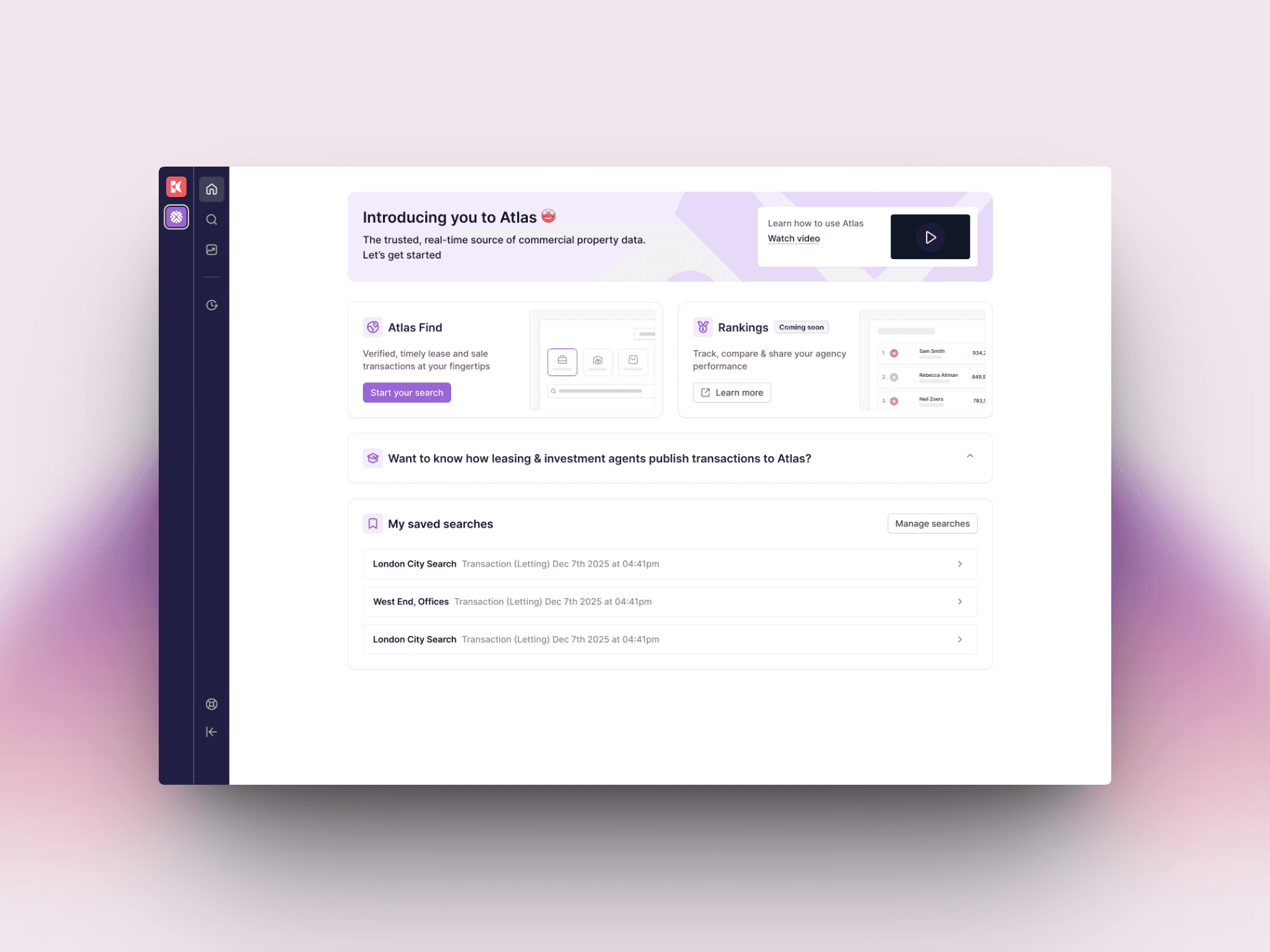
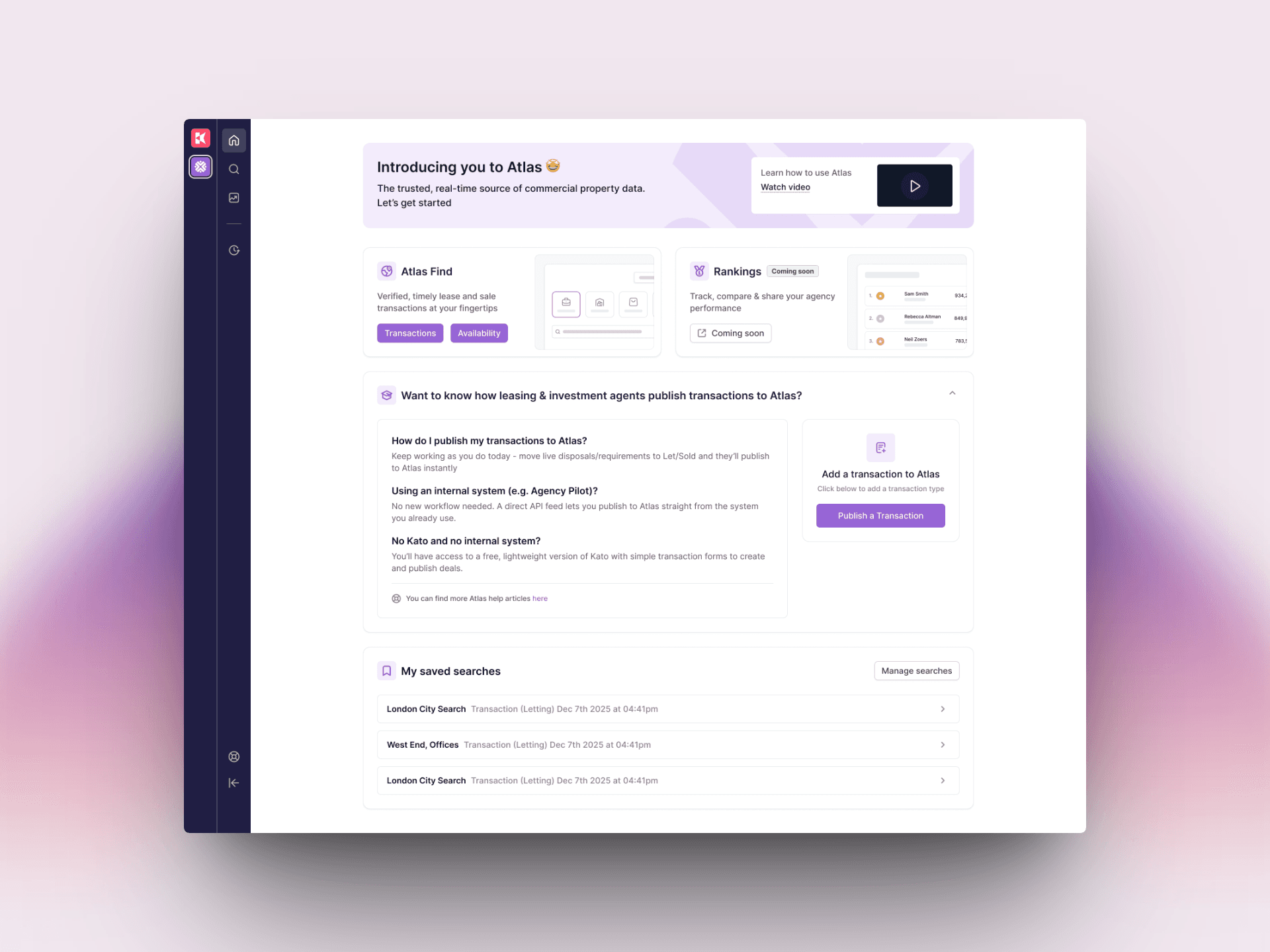
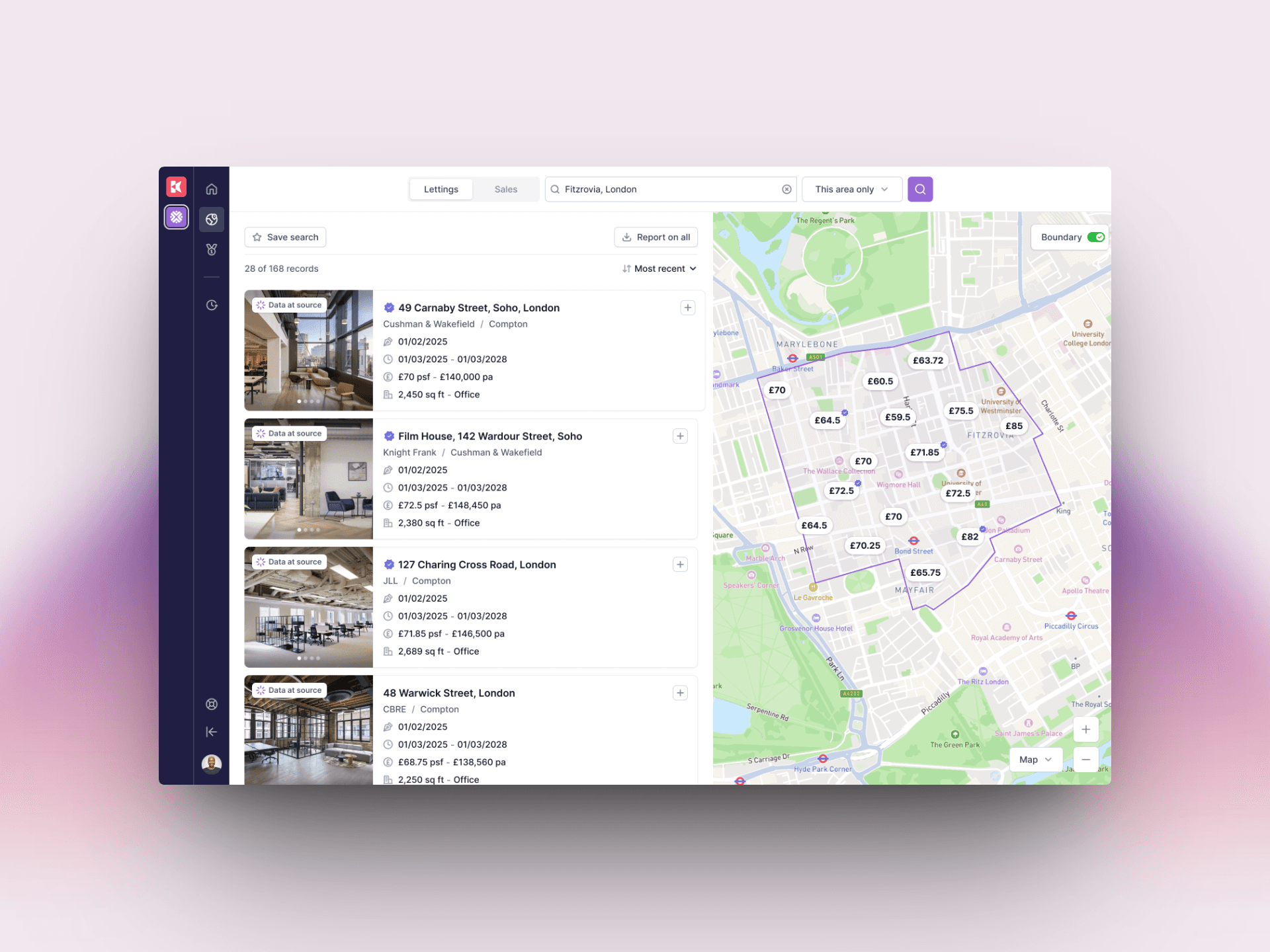
Led the design of the Atlas homepage, the central surface where agents land, search, and extract value from the platform.

  • Interactive search and mapping: by location, custom polygon drawing, or pre-populated markets and submarkets
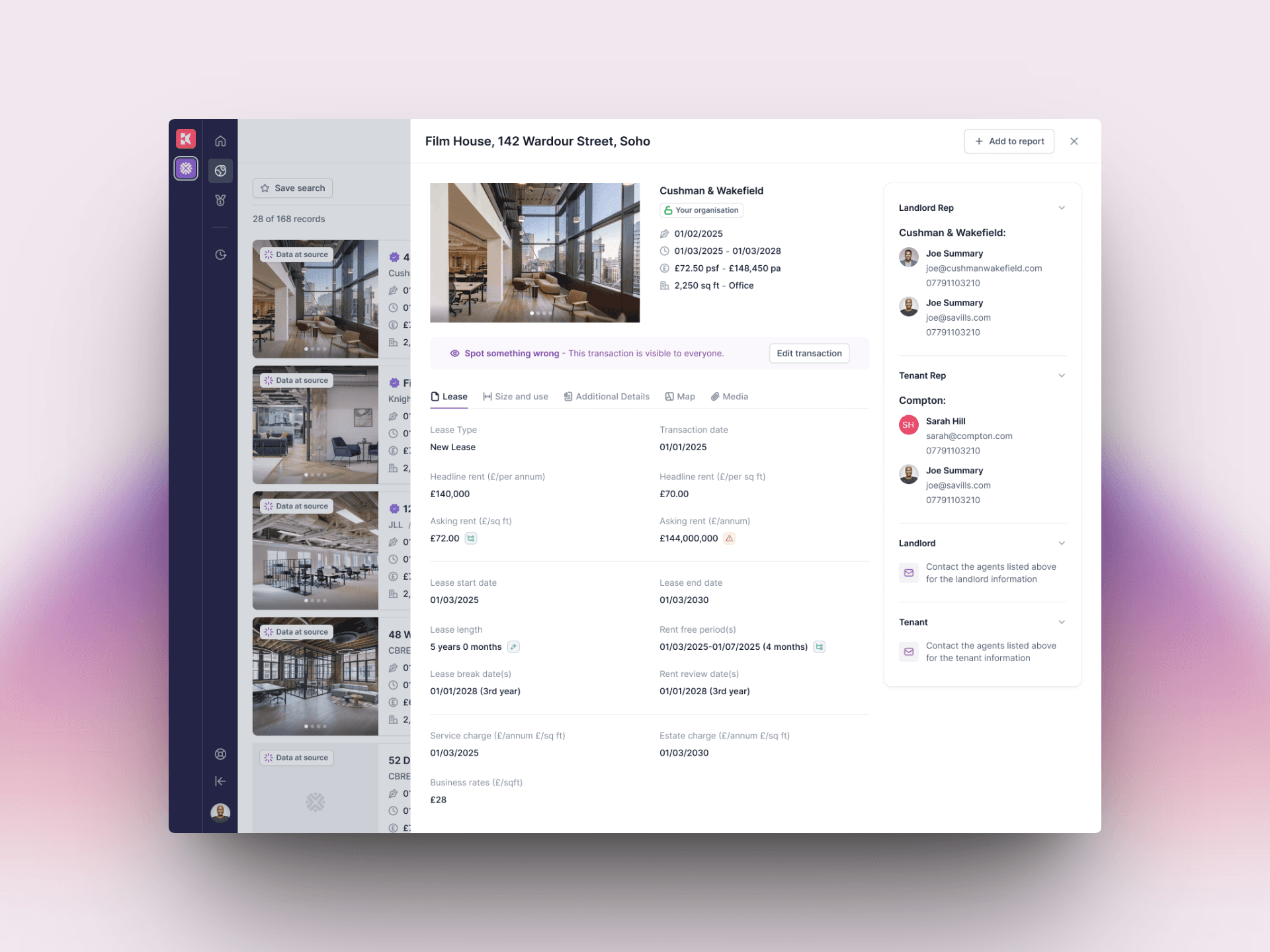
  • Real-time comparable evidence: verified lease and sale transactions surfaced instantly
  • Agency rankings: filterable by region, sector, and deal type to benchmark performance and spot opportunity gaps
  • Saved searches and export: custom polygons, Excel export, and alerts
Design challenge

Balancing information density with clarity. Agents needed to scan large volumes of transaction data quickly while still being able to drill into individual deal details.
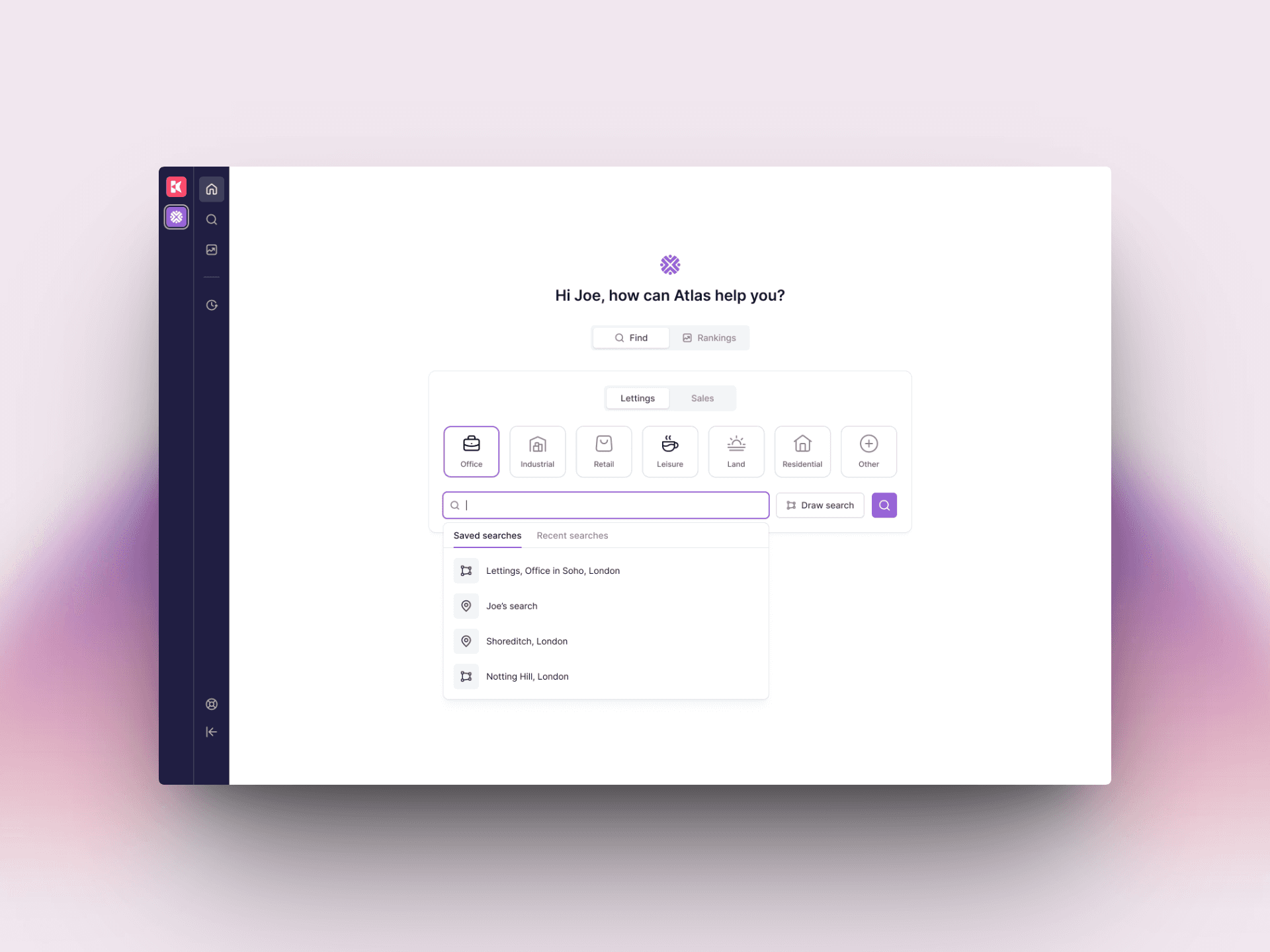
Search and mapping
Comparable evidence

02Testing, critique & collaboration

Ran user testing throughout the product lifecycle, from early concepts to pre-launch refinement, and shaped the transaction workflows and reporting flows through critique and iterative feedback, rather than direct ownership.

  • Tested the full experience: dashboard, contribution workflows, and report generation, with agency leaders, valuers, investment agents, and research teams across multiple firms
  • Identified friction points in the contribution flow that were blocking adoption, feeding findings back to shape each iteration
  • Critiqued the publish-to-Atlas flow: confidentiality controls, data entry patterns, edge cases, and error states
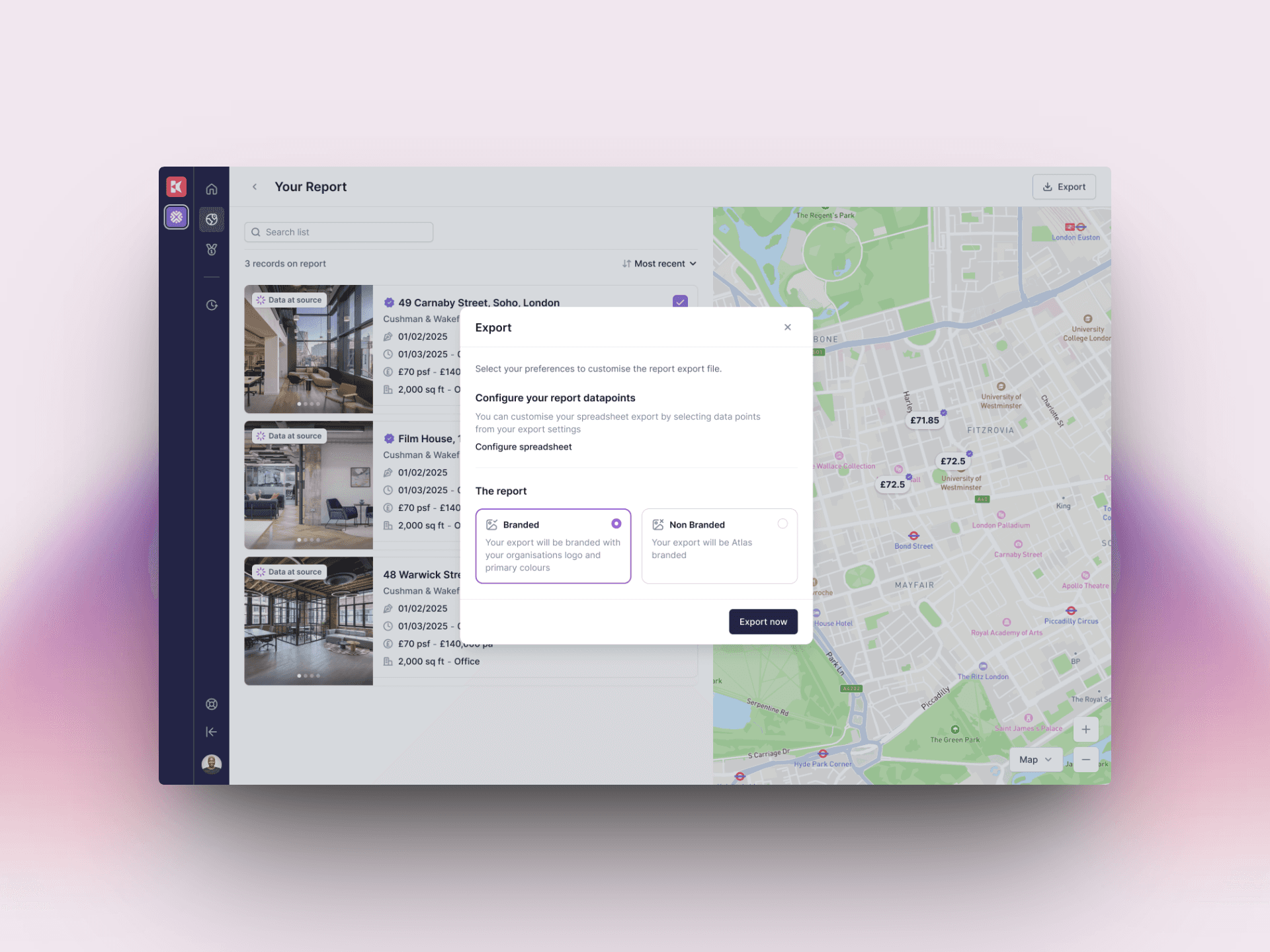
  • Refined report generation with valuers and agency leaders, connecting dashboard search to shareable, branded comparable evidence
Key insight

Agency leaders needed fundamentally different things from the dashboard than valuers. This shaped how we structured information hierarchy and entry points.
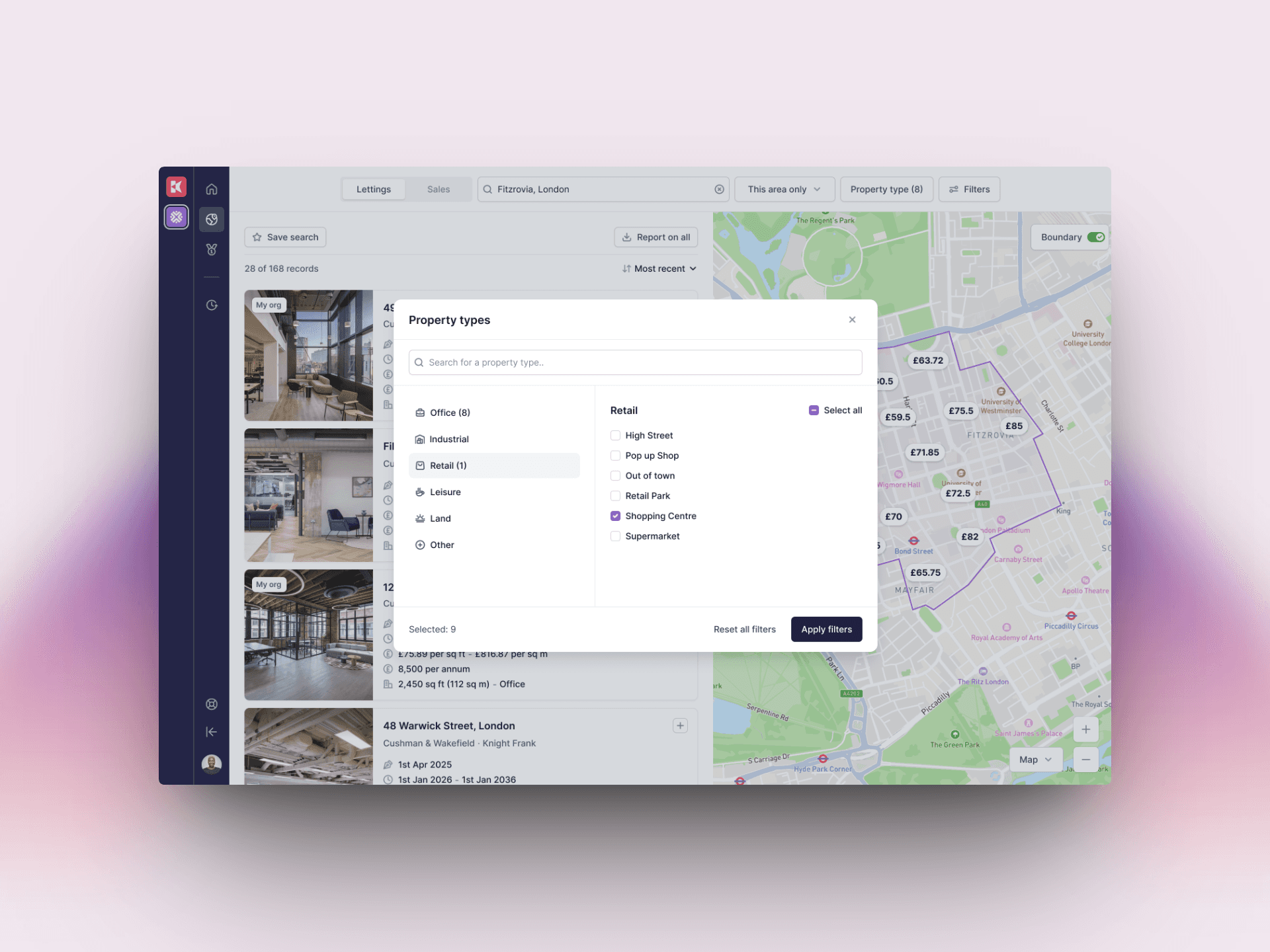
Testing sessions
Workflow iterations
100+

companies now trust Atlas

hrs → secs

to produce comparable evidence

0–1

designed and launched from scratch

Outcome
  • Launched a 0–1 product now trusted by 100+ companies including Savills, Knight Frank, CBRE, JLL, Cushman & Wakefield, and Colliers
  • Reduced comparable evidence generation from hours of manual research to seconds
  • Eliminated double-keying through seamless workflow integration
  • Established a collaborative, industry-wide data standard for UK commercial property
Report output
Agency rankings
Learnings
  • In 0–1, user testing isn't a phase; it's continuous, and the earlier you test with real users the fewer assumptions survive
  • Not every contribution needs to be direct ownership. Collaborative critique and testing can shape a product just as meaningfully
  • Data platforms live or die on trust. The UX of verification, provenance, and confidentiality matters as much as the data itself
  • Different user types need fundamentally different things from the same interface; one dashboard doesn't mean one experience