Work About Contact open to new roles

Personal project × case study

A shared operating system for families

A consumer app that simplifies how individuals, couples, and families manage daily life (calendars, tasks, lists, and reminders) by letting people interact naturally instead of forcing them into rigid systems.

ROLEDesigner & builder
SERVICEProduct design
AI-assisted build
STACKFigma · Claude · Cursor
STATUSLive in the App Store
200 real users
Noa app
The problem

Managing everyday life is fragmented and mentally taxing:

  • Information is spread across calendars, notes, messages, and mental load, usually held by one person
  • Coordination between partners or families is inconsistent
  • Existing tools are either too simple (notes apps) or too complex (Notion-style systems)
  • Creating structure requires effort before any value is realised

The result: missed events ("you didn't tell me?"), uneven mental load across households, and constant low-level friction.

The approach
Core principle

Let users think naturally, and let the system handle structure.

01Natural language as the primary interface

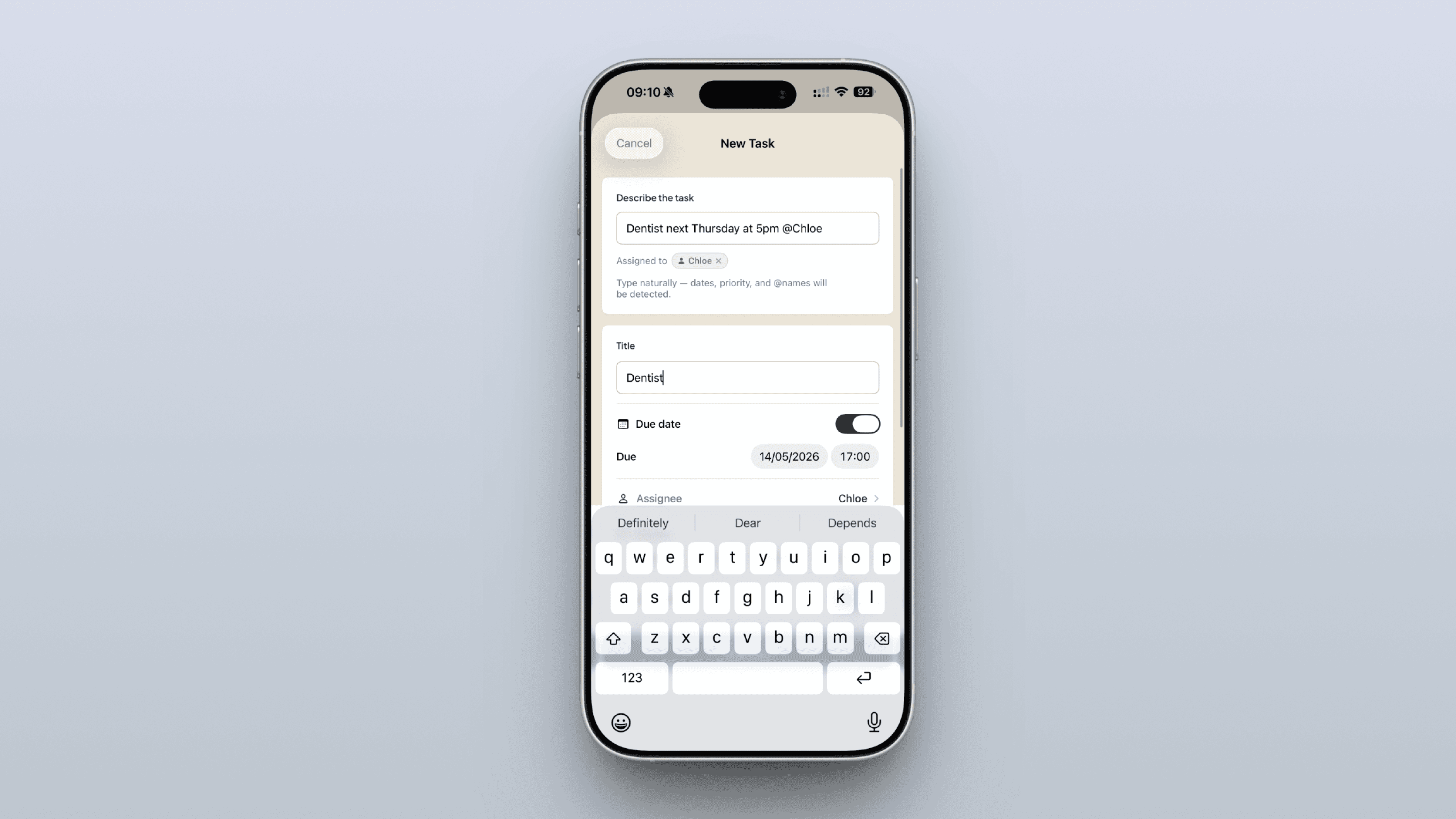
Users input tasks, events, or lists in plain language: "Add dentist next Tuesday at 3pm for family", "Pick up milk and bananas", "Remind me Phoebe has non-uniform day Friday". The system parses intent, extracts key details (date, time, person, context), and assigns or categorises automatically. No manual setup, no rigid input flows, no cognitive friction.

Natural language capture
Smart categorisation

02Unifying tasks, calendar, and lists

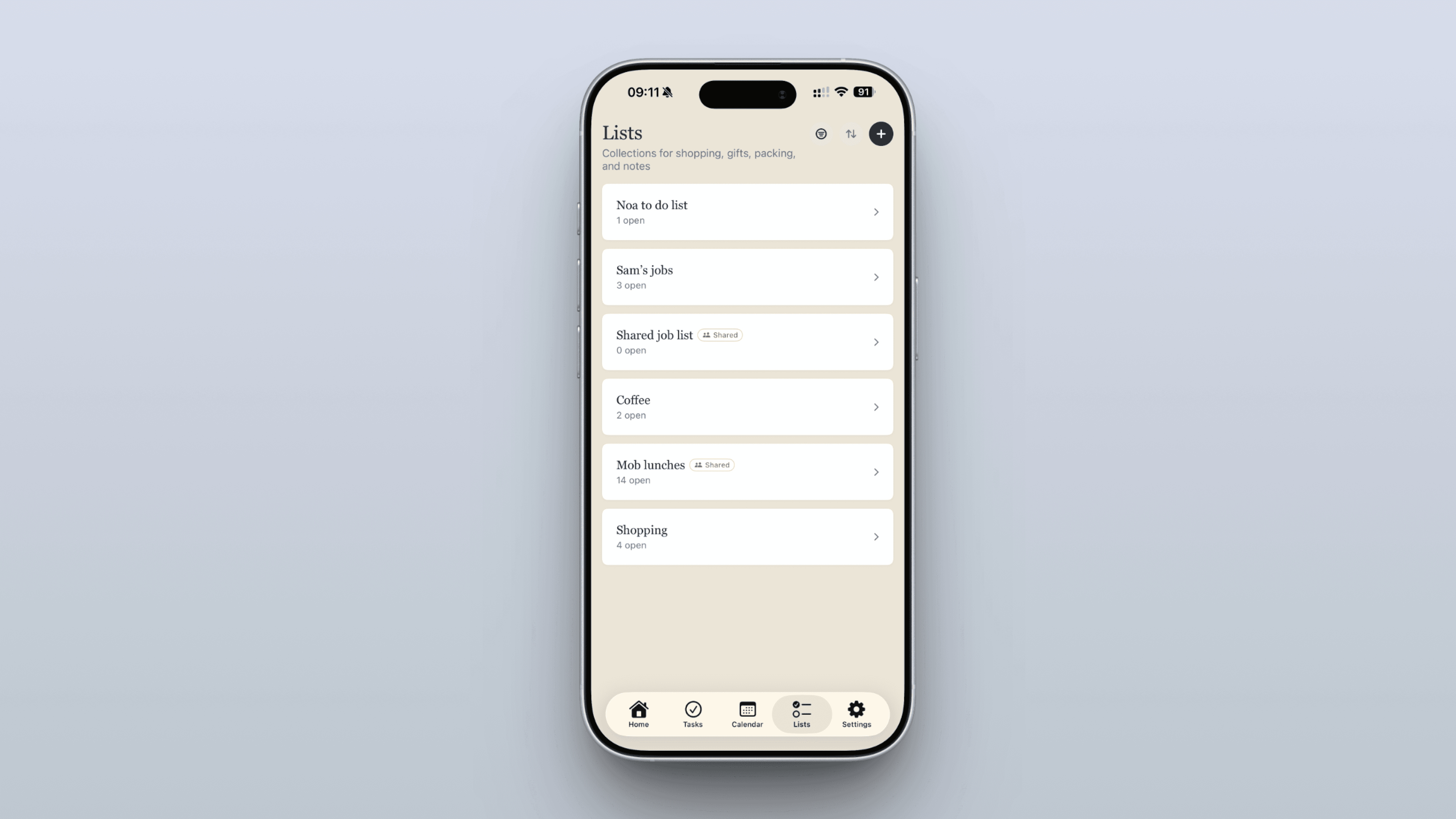
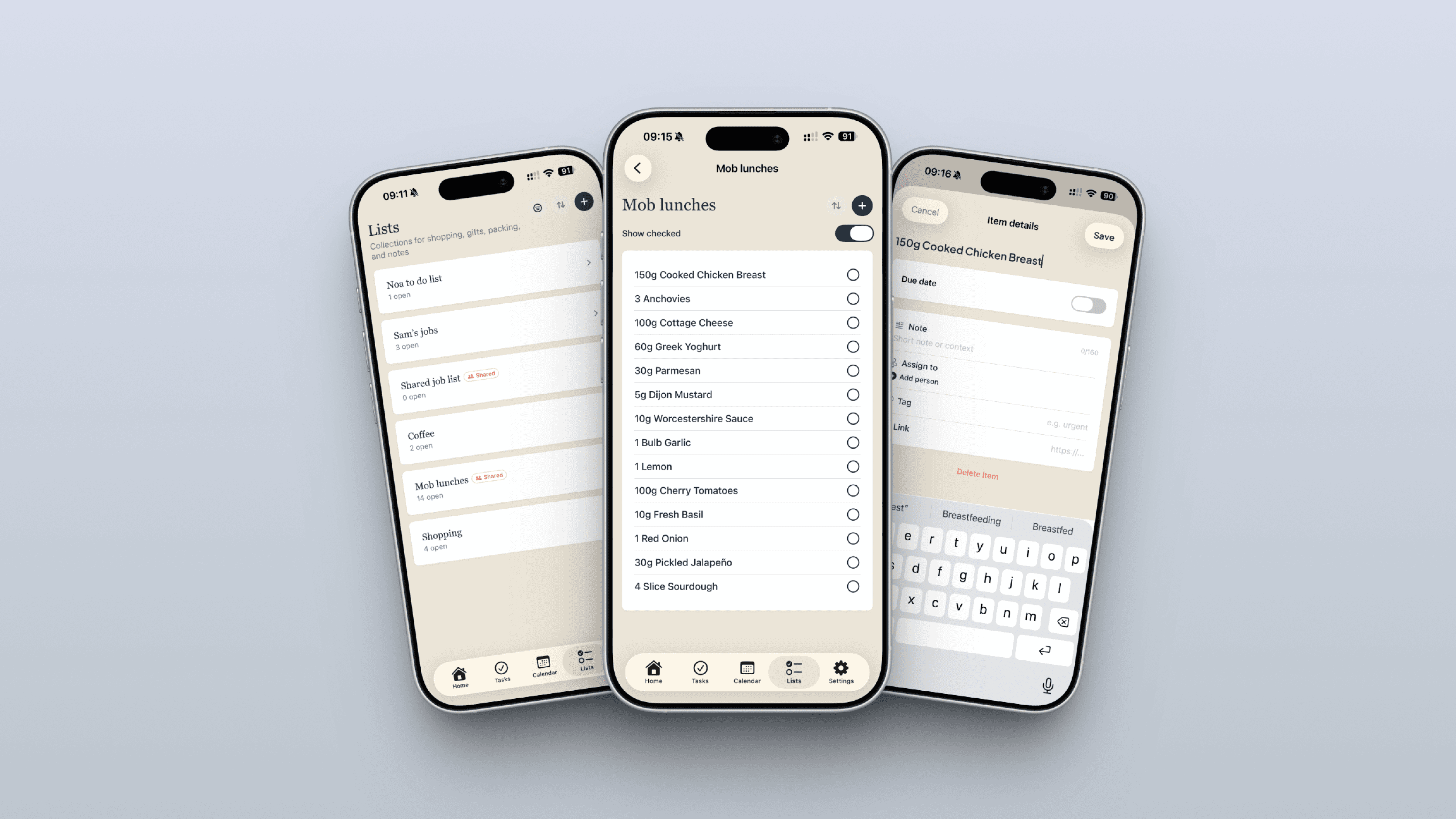
Instead of separate tools, Noa treats everything as part of one shared system: tasks can become events, notes can become actionable items, lists can be shared and assigned. The design focus: avoid duplication, maintain flexibility without complexity, keep the system understandable at a glance.

03Shared context for families & couples

Designed for multiple users from the start: assign tasks to specific people, shared visibility across the household, clear ownership of responsibilities. The key goal: reduce reliance on one person holding everything.

Shared household view
Task ownership

04AI in the product and in the build

AI isn't just a feature; it's how the product was made. In-product: natural language parsing, smart categorisation and structuring. In development: rapid prototyping with Claude and Cursor, iterating on flows quickly without over-specifying in Figma, and exploring agent-led workflows for faster UI iteration.

05Designing for real behaviour

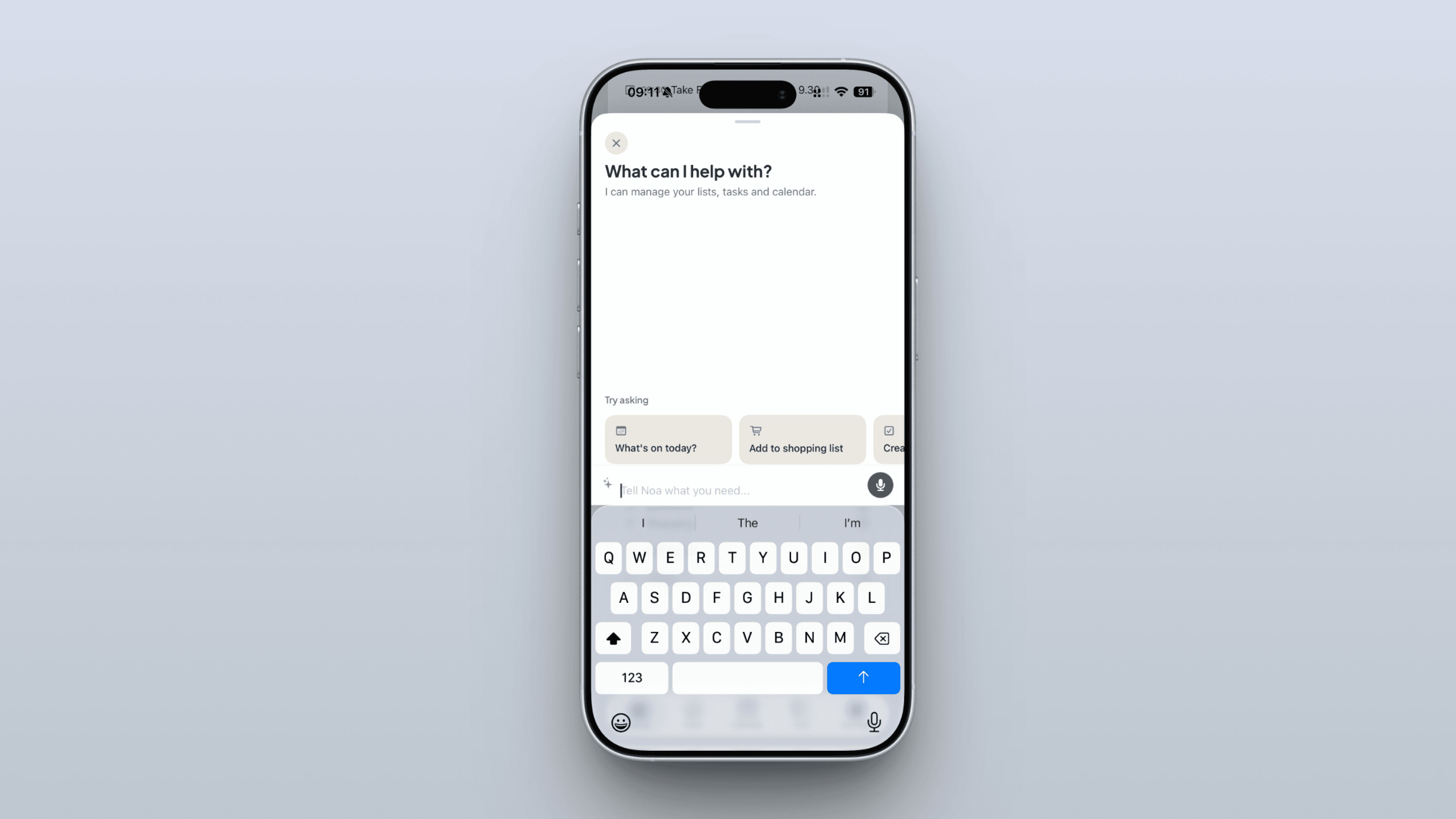
Quick capture over structured input. Shared accountability over personal organisation. Low friction over feature depth. One-tap capture flows, minimal required input, and defaults that just work.
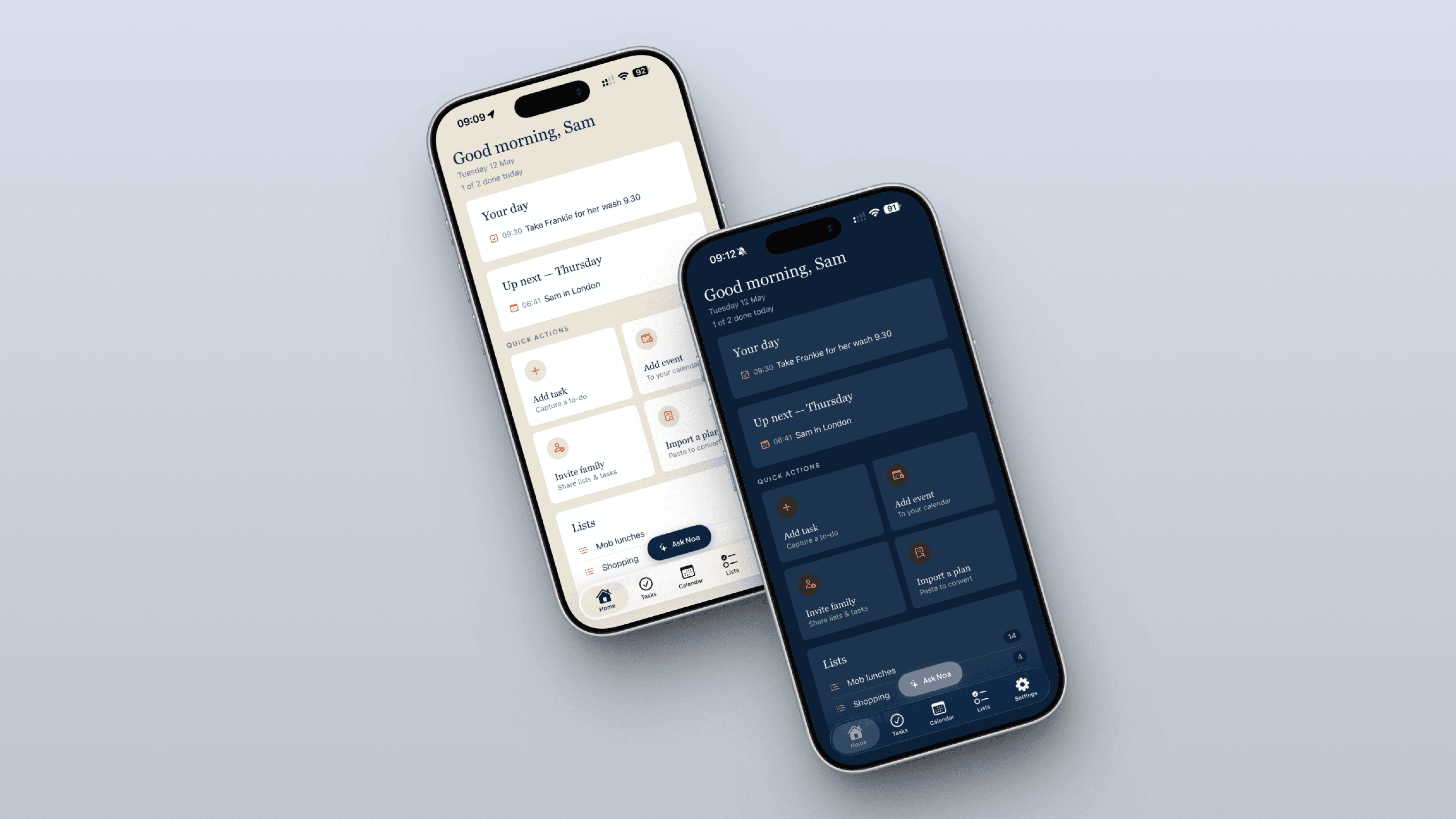
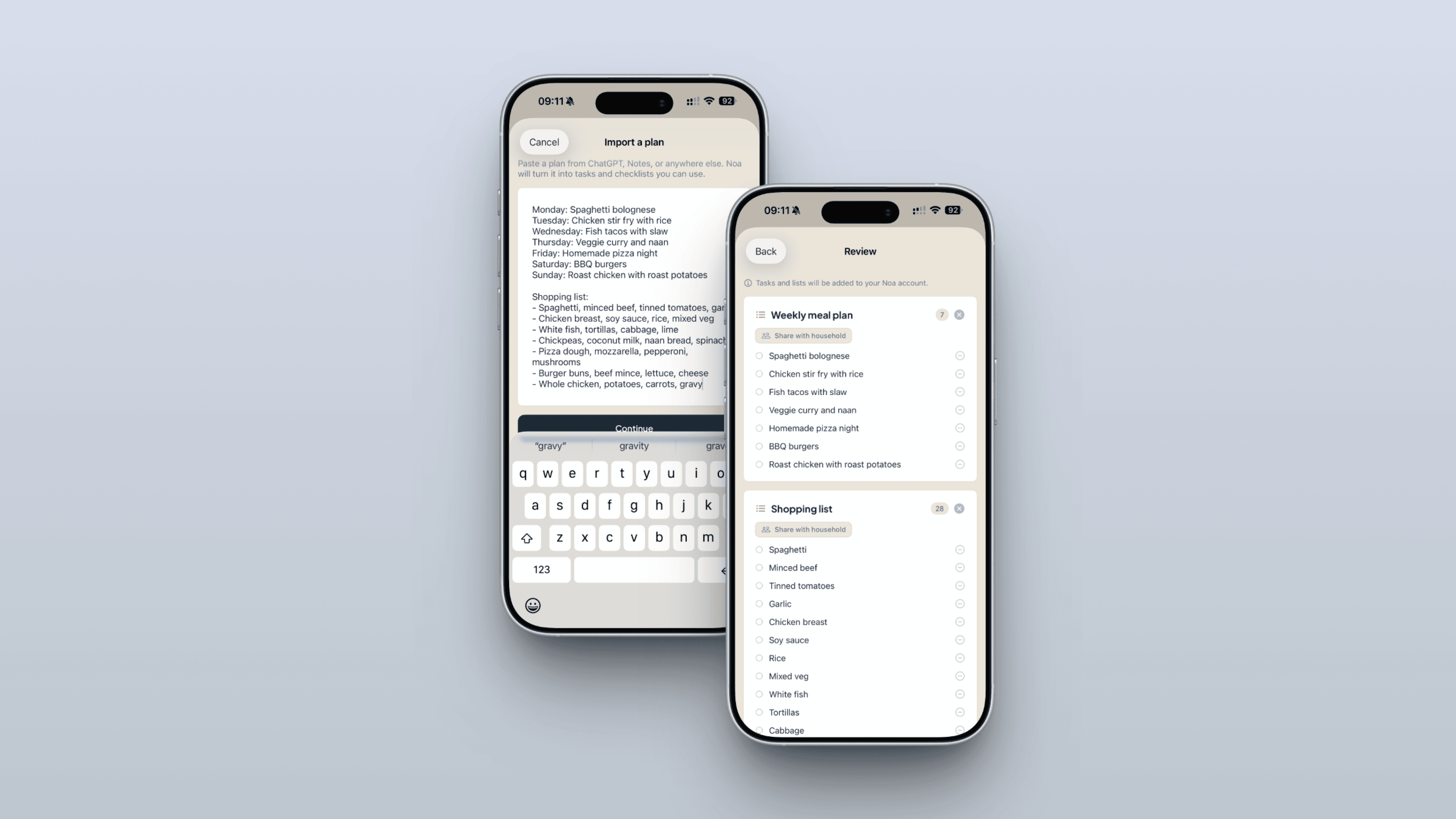
Quick capture
Defaults that work
Outcome
  • Designed, built, and shipped an end-to-end consumer product from concept to the App Store
  • Live with 200 real users actively using the app and providing feedback
  • Validated demand around shared coordination, natural language input, and reducing mental load in households
  • Established a flexible foundation for personal use, couples, and family plans
Learnings
  • The biggest problem isn't organisation, it's coordination
  • Natural language dramatically lowers the barrier to entry
  • Shared systems only work when ownership is visible and balanced
  • Speed of iteration is critical when defining new interaction models
  • AI is most valuable when it removes friction, not adds complexity